COEP TECHNOLOGICAL UNIVERSITY

Department of Instrumentation
&
Control Engineering

Advanced Control Laboratory

The Advanced Control Laboratory provides practical exposure to modern control techniques, PID tuning, state-space analysis, digital control, and real-time implementation of industrial control systems. It enables students to design, analyze, and optimize control systems used in automation and process industries. Students learn how to analyze, design, simulate, and implement control systems used in industrial automation, robotics, aerospace, power systems, and process industries.

LAB INCHARGE

Dr. Pramod D. Shendge

HEAD OF THE DEPARTMENT

Associate Professor

pds.instru@coeptech.ac.in

+91 02025507035

Ph.D. in Instrumentation Engineering
Savitribai Phule Pune University 2015

M.Tech in Instrumentation Engineering
COEP Technological University 2009

B.E. in Instrumentation Engineering
University of Pune 2007

1. Control Systems

2. Industrial Automation

Publications

Anew state and perturbation observer based sliding mode controller for uncertain systems
Divyesh Ginoya · Pramod D. Shendge · Balasaheb M. Patre · Shrivijay B. Phadke
Download PDF
Active suspension systems for vehicles based on a sliding-mode controller in combination with inertial delay control
Vaijayanti S Deshpande, Pramod D Shendge and Shrivijay B Phadke.
Download PDF
An inertial delay observer-based sliding mode control for active suspension systems
Sunny Gupta, Divyesh Ginoya, P D Shendge and Shrivijay B Phadk

Download PDF

Lab Incharge

Lab Equipments

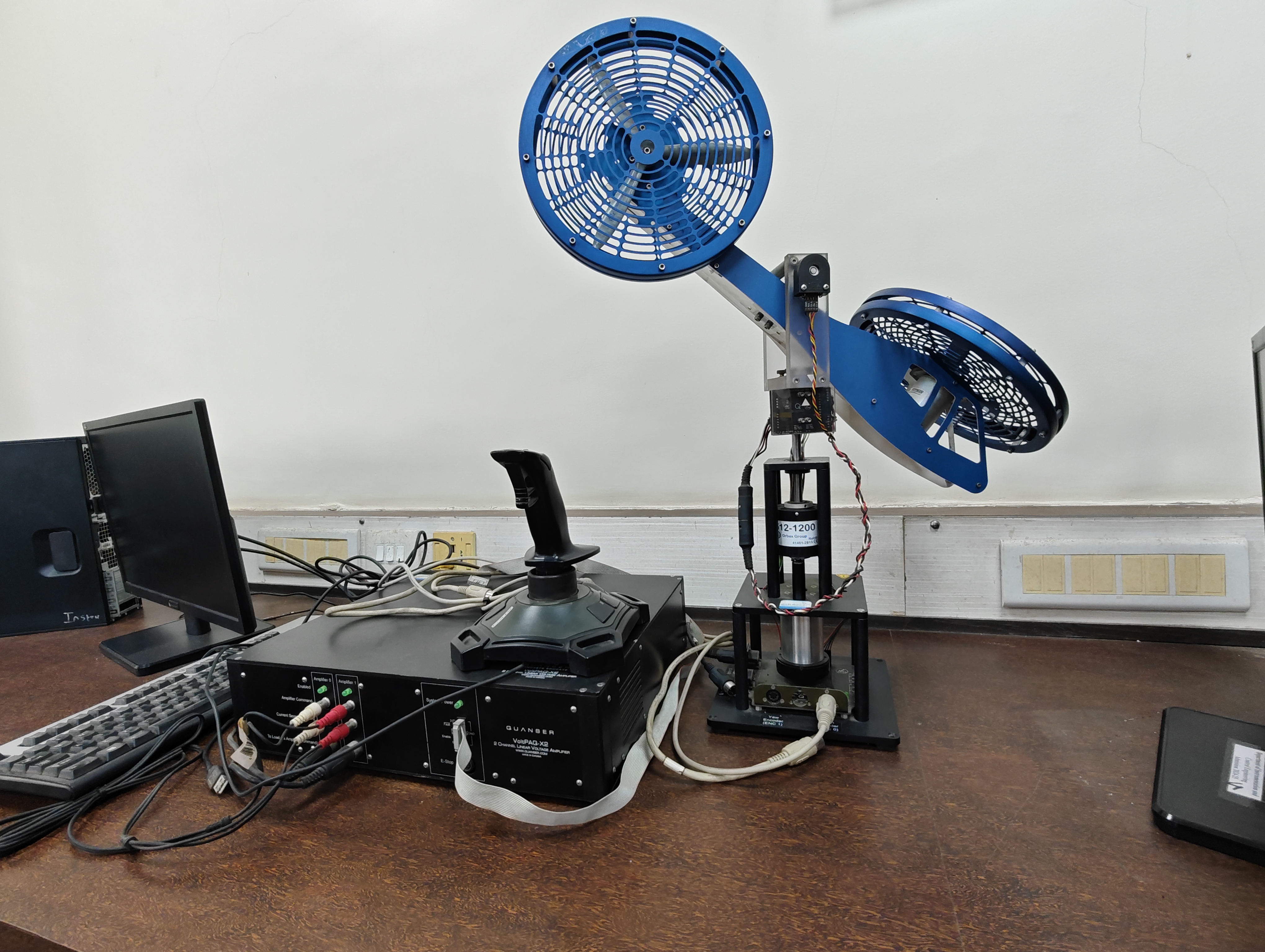
Aero 2 equipment

2-DOF Helicopter System


The system uses two rotors to generate thrust and enable safe, precise control of its motion. Interchangeable propellers and user-adjustable thrust vectors support multiple aerospace experiment configurations. It can simulate systems such as a half-quadrotor, 1-DOF VTOL, and 2-DOF helicopter. The compact base includes a built-in amplifier, current sensor, and data acquisition device. It features four high-resolution optical encoders and an Inertial Measurement Unit (IMU) for accurate pitch and yaw measurement. Slip ring wiring enables continuous 360° yaw rotation without cable twisting.

2 DOF Serial Flexible Joint


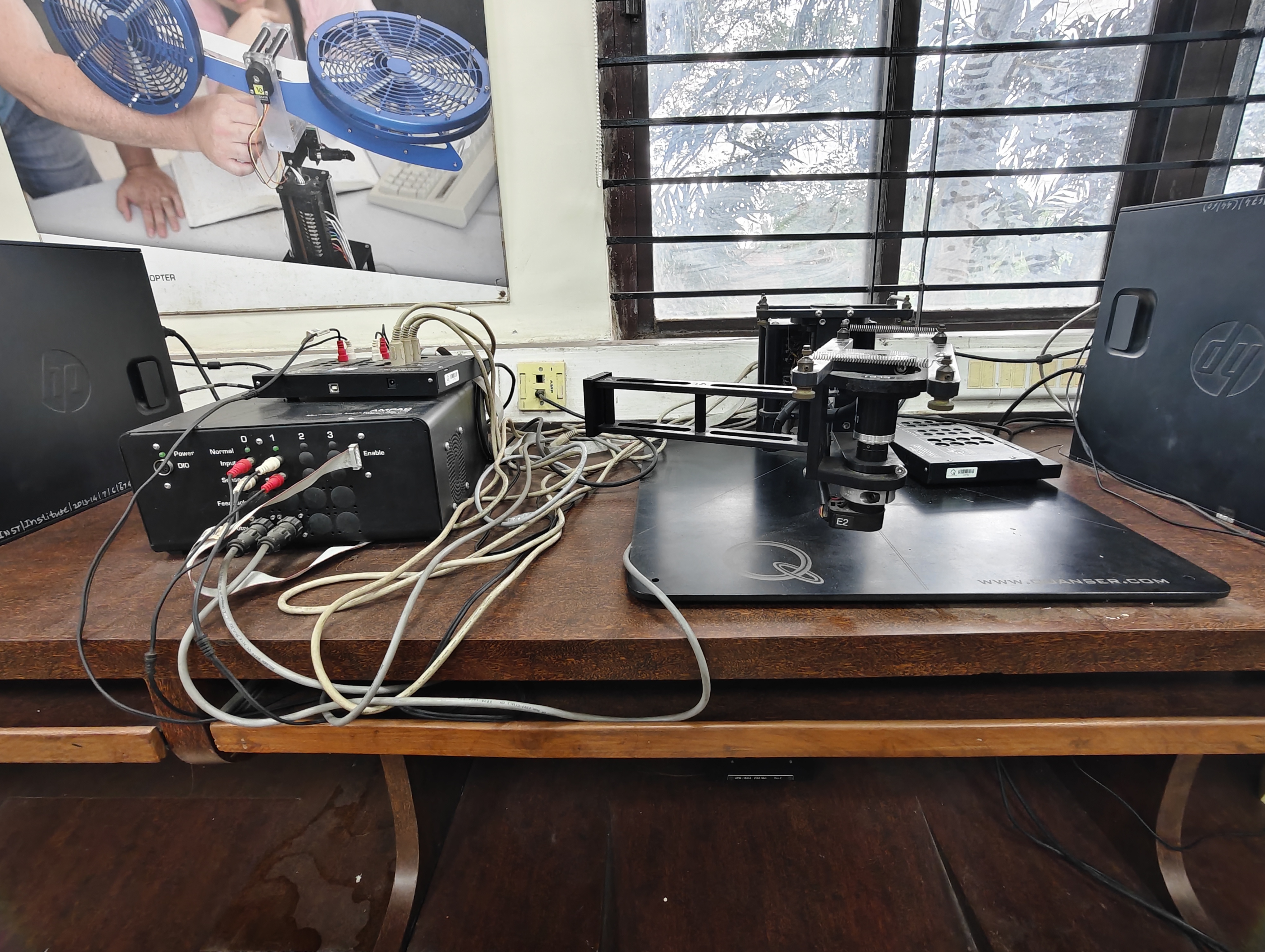
A 2-DOF (Two Degree of Freedom) Serial Flexible Joint can rotate independently in two axes. It is commonly used to study robotics, control systems, and vibration dynamics. The flexible joint introduces elasticity between the motor and the load, making the system more realistic. It helps in analyzing oscillations, resonance, and stability of mechanical systems. Sensors such as encoders are used to measure joint angles and motion accurately. The setup is widely used in engineering laboratories for learning PID control, state-space control, and flexible system modeling.

2 DOF serial flexible joint
ABS braking system

ABS Antilock Braking System


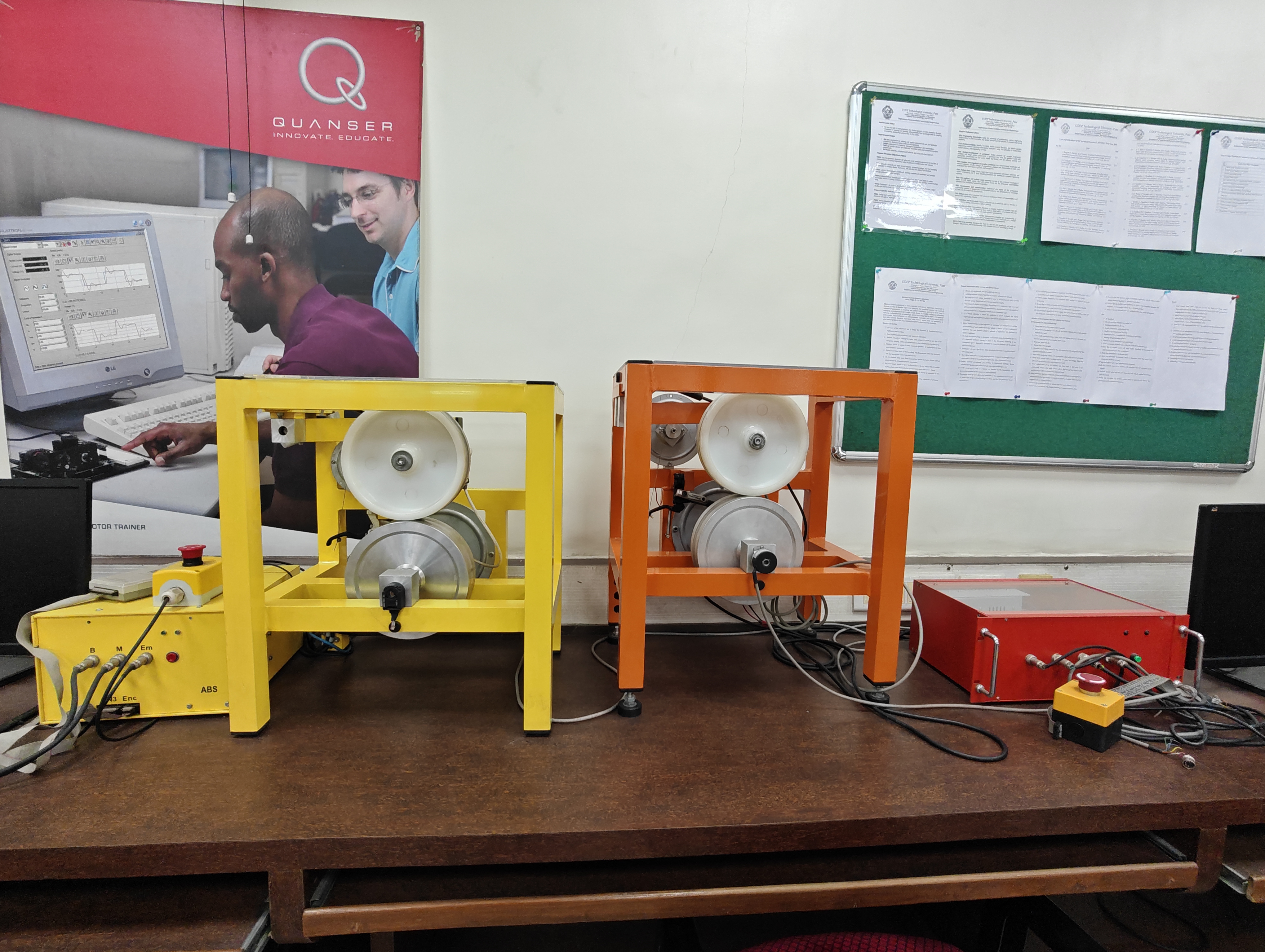
The ABS improves braking performance while maintaining vehicle stability and steering control. The system is driven by a DC motor and controlled through a PC. Two encoders measure the rotational speed and angle of the road wheel and car wheel. Braking begins automatically when the preset threshold speed is reached. The ABS uses slip control algorithms to prevent wheel lock during braking. It is used to study vehicle dynamics, braking systems, and automotive control engineering.

Major Equipments

DOF gyroscope

DOF GYROSCOPE


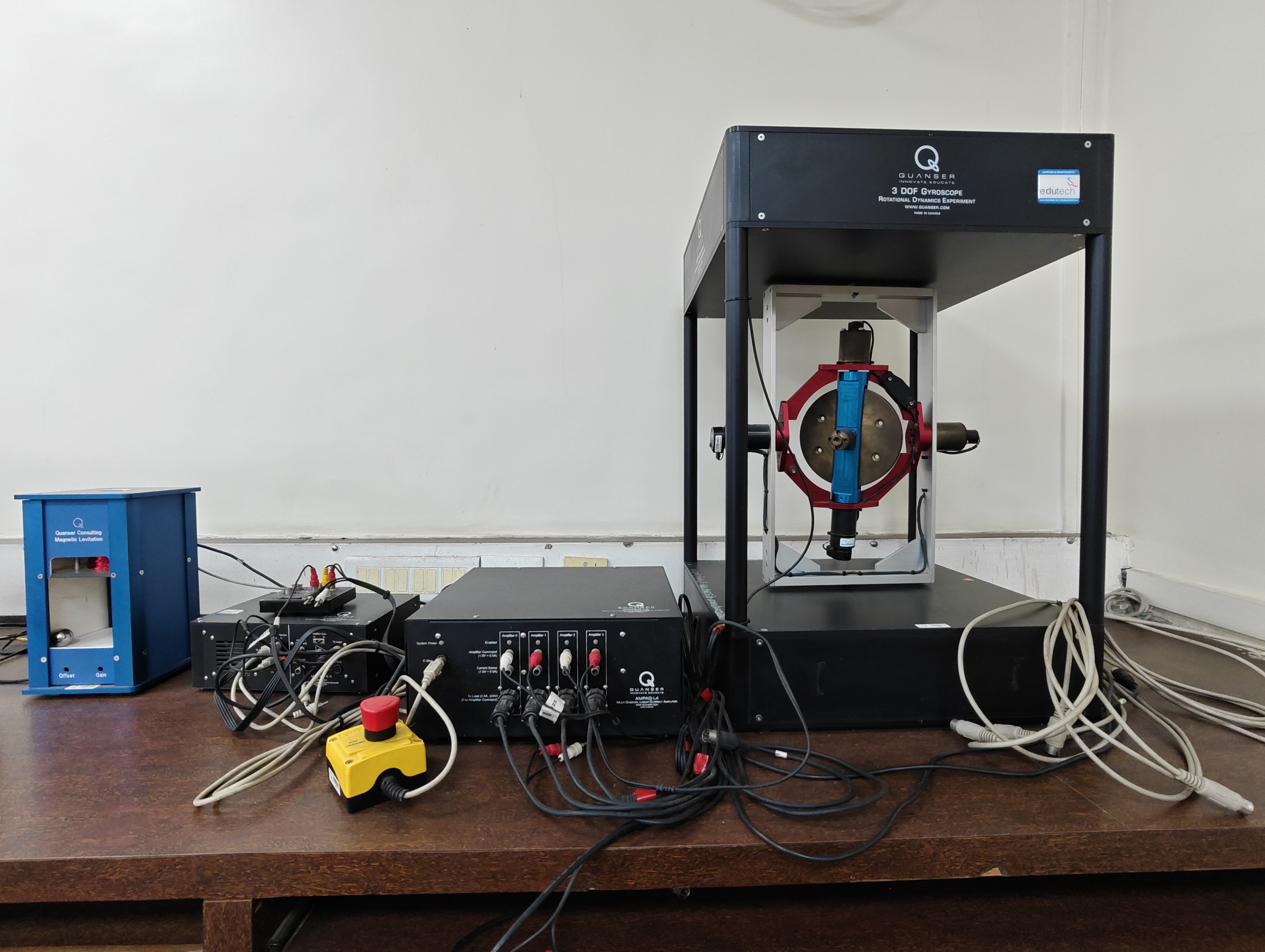
The 3-DOF Gyroscope is designed for studying rotational dynamics, attitude control, and momentum exchange systems. It uses four direct-drive DC motors and high-resolution optical encoders for precise motion control. It provides continuous 360° rotation in roll, pitch, and yaw using low-friction slip rings. The system supports research in spacecraft attitude control, satellite orientation, inertial navigation, and autopilot systems. It features QUARC® for MATLAB®/Simulink®, allowing users to develop and test custom control algorithms. It offers hands-on learning in system modeling, state estimation, compensator design, and LQR/LQG control for aerospace and robotics.

COUPLED TANKS


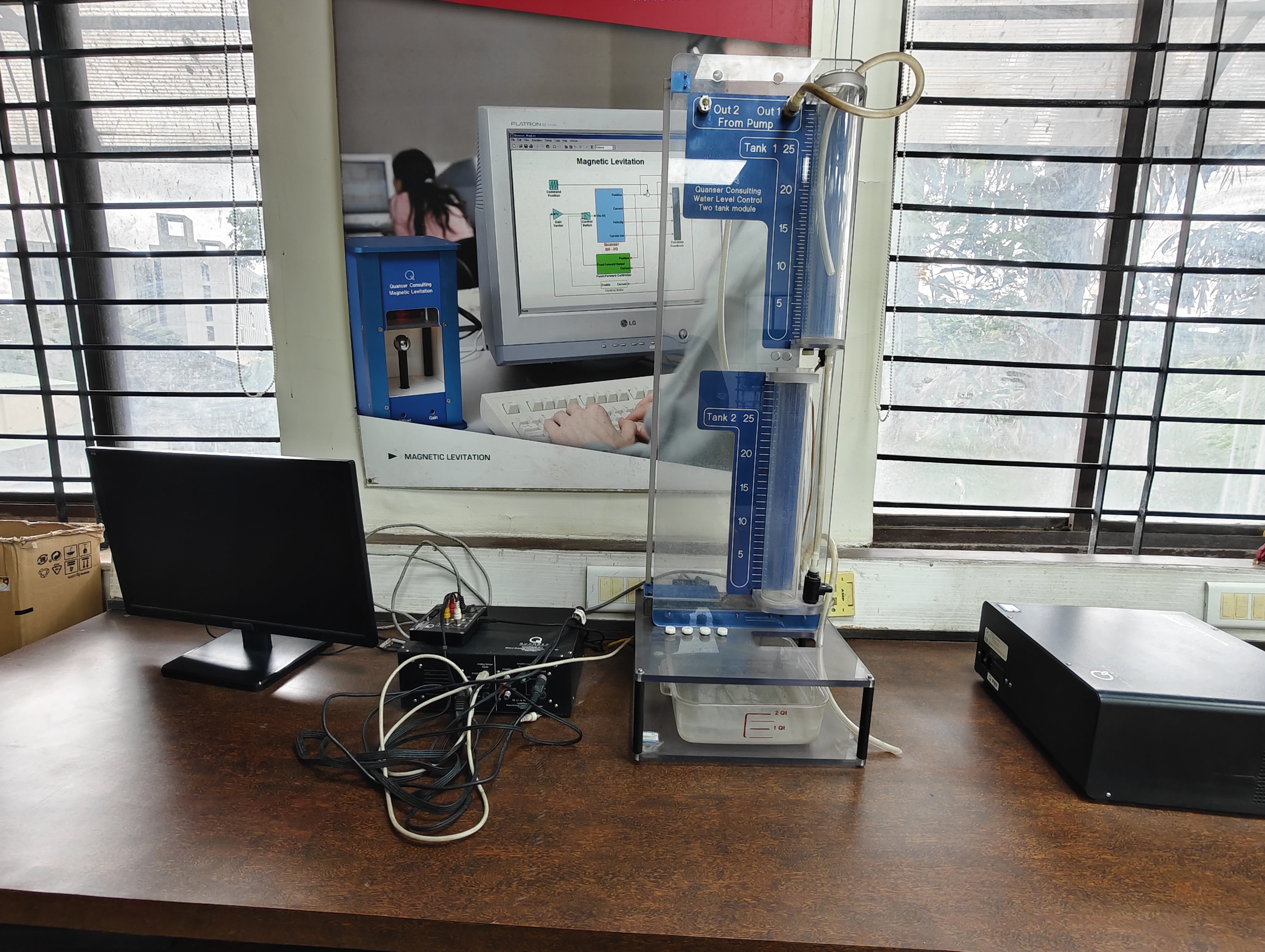
The Coupled Tanks system models industrial liquid-level processes used in chemical, water, and process industries. It consists of two transparent tanks, a single pump, and precision pressure sensors for flow measurement. The system supports SISO, cascaded, and MIMO control experiments through reconfigurable plumbing. It is fully compatible with MATLAB®/Simulink®, LabVIEW™, and QUARC® for real-time control implementation. The QLabs Virtual Coupled Tanks digital twin enables remote learning, simulation, and rapid prototyping. It is widely used for process control education, system modeling, and control engineering research.

Coupled tanks system
Active suspension system

ACTIVE SUSPENSION


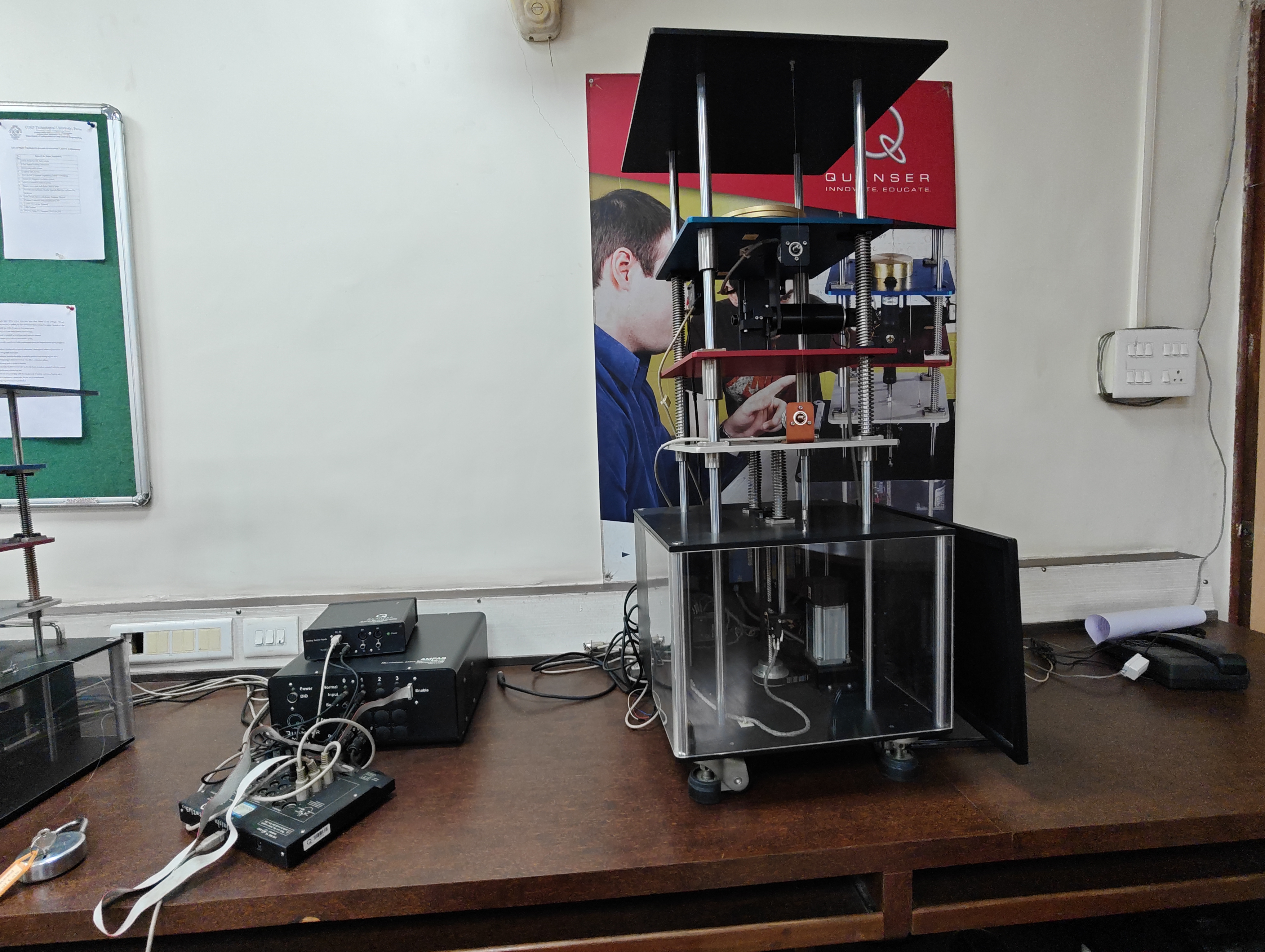
The Active Suspension experiment teaches cutting-edge technology that has brought a new generation of vehicles to life. Active suspension technology is used in the automotive industry to continuously control the vertical movement of the vechicle wheel using an actively-controlled actuator placed on the suspension axis. Similar technologies have also been used in train bogies to improve the curving behavior of the train and the decreased acceleration perceived by the passenger.

Major Equipments

Unmanned vehicle system

Unmanned Vehicle System (UVS)


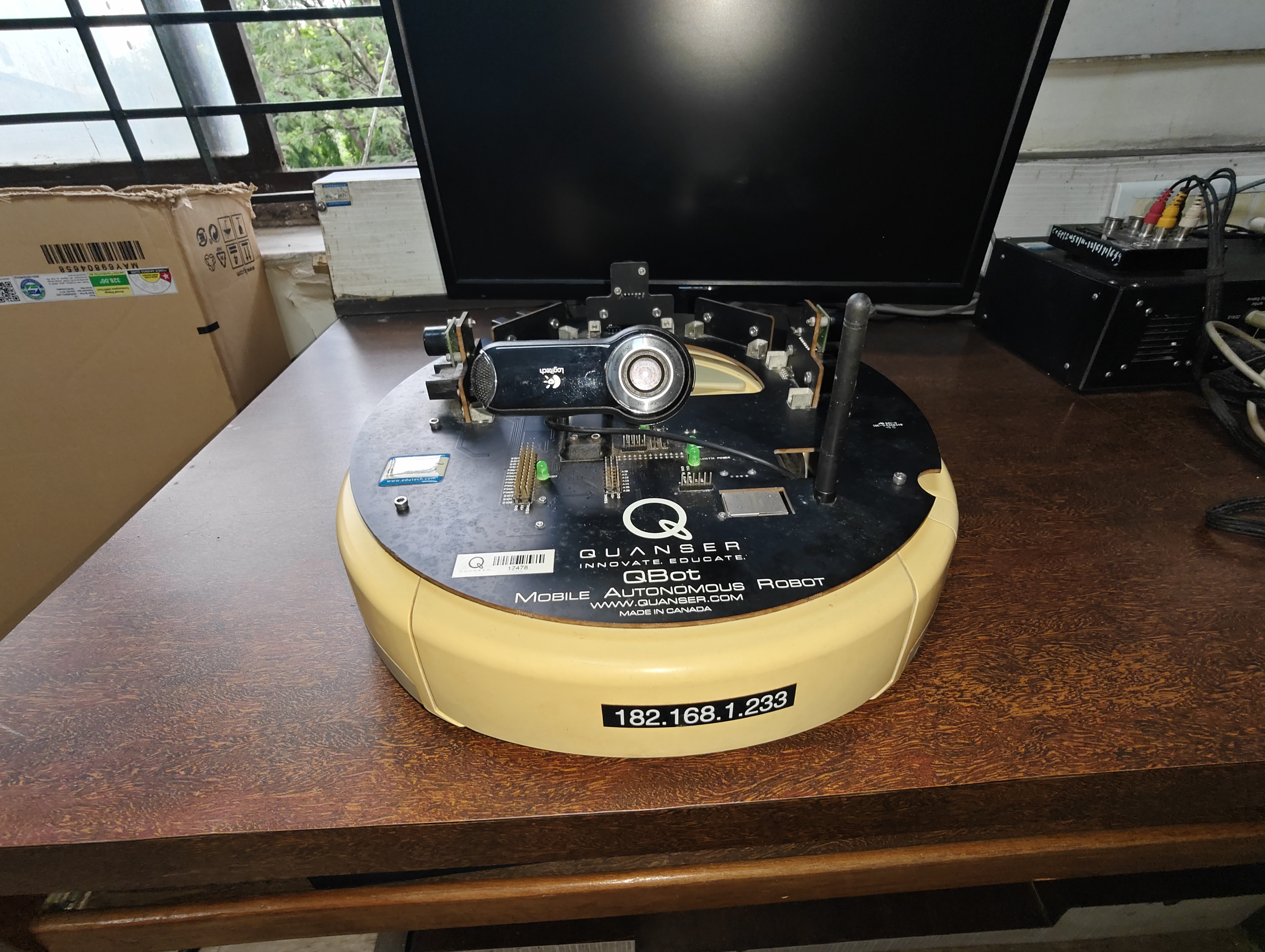
An Unmanned Vehicle System (UVS) operates without a human driver or pilot on board. It is controlled remotely or operates autonomously using sensors and intelligent control systems. UVSs can function on land, in the air, on water, or underwater. They use technologies such as GPS, cameras, LiDAR, and wireless communication for navigation and monitoring. UVSs are widely used in defense, agriculture, surveillance, disaster management, and industrial inspection. These systems improve safety, efficiency, and accuracy while reducing human risk in hazardous environments.

Magnetic Levitation system


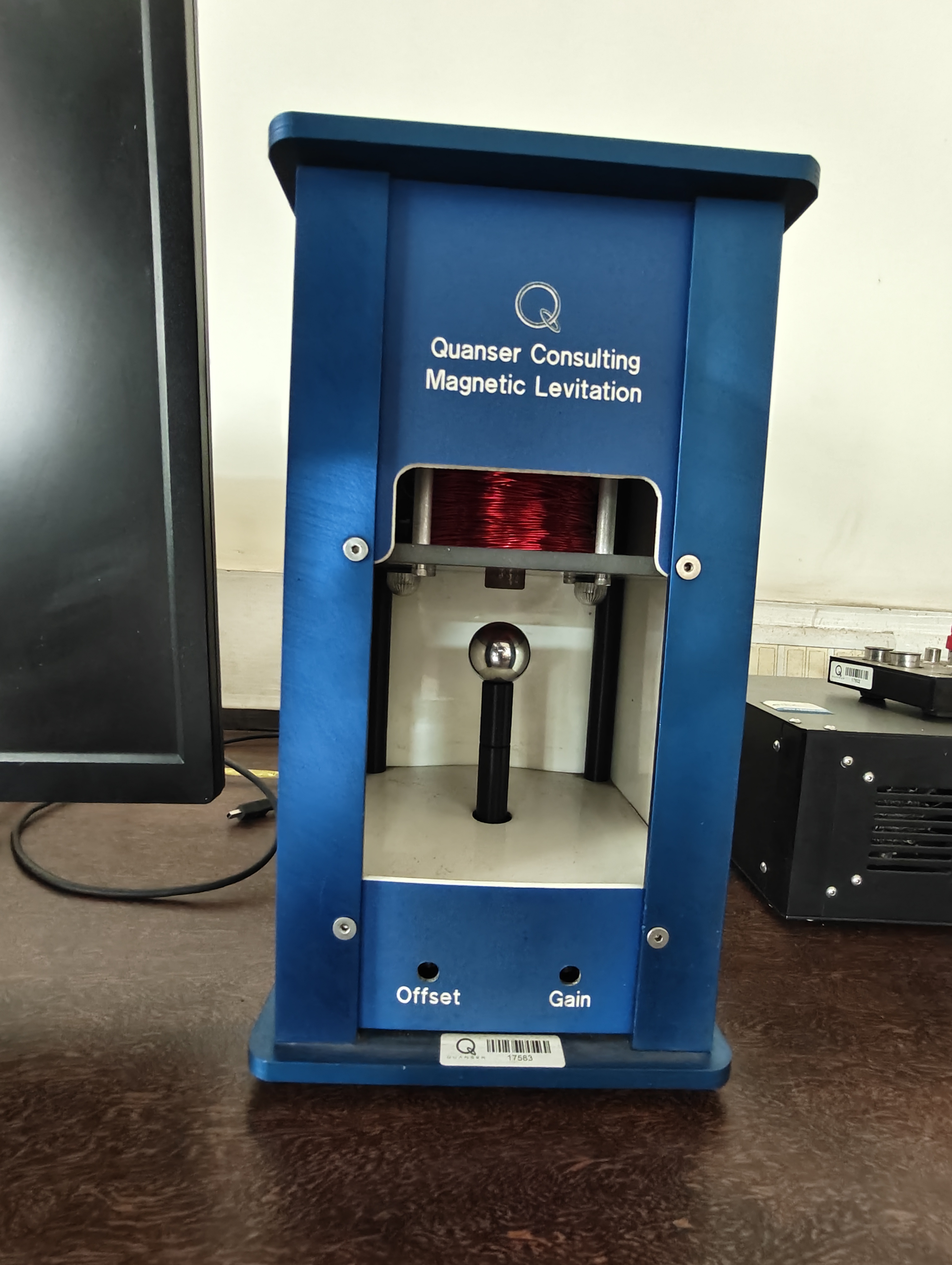
The Magnetic Levitation System (MLS) is a nonlinear, unstable, and frictionless dynamic control system. It uses an electromagnet to levitate a ferromagnetic sphere without physical contact. A controlled voltage is applied to the electromagnet to maintain the sphere at a desired position. The controller continuously balances the gravitational force and the electromagnetic force. The coil current is measured for system identification and advanced control strategy development. MLS is widely used to study real-time control systems, nonlinear control, and magnetic suspension technology.

Magnetic levitation system
Rotary servo base unit

Rotary Servo Base Unit


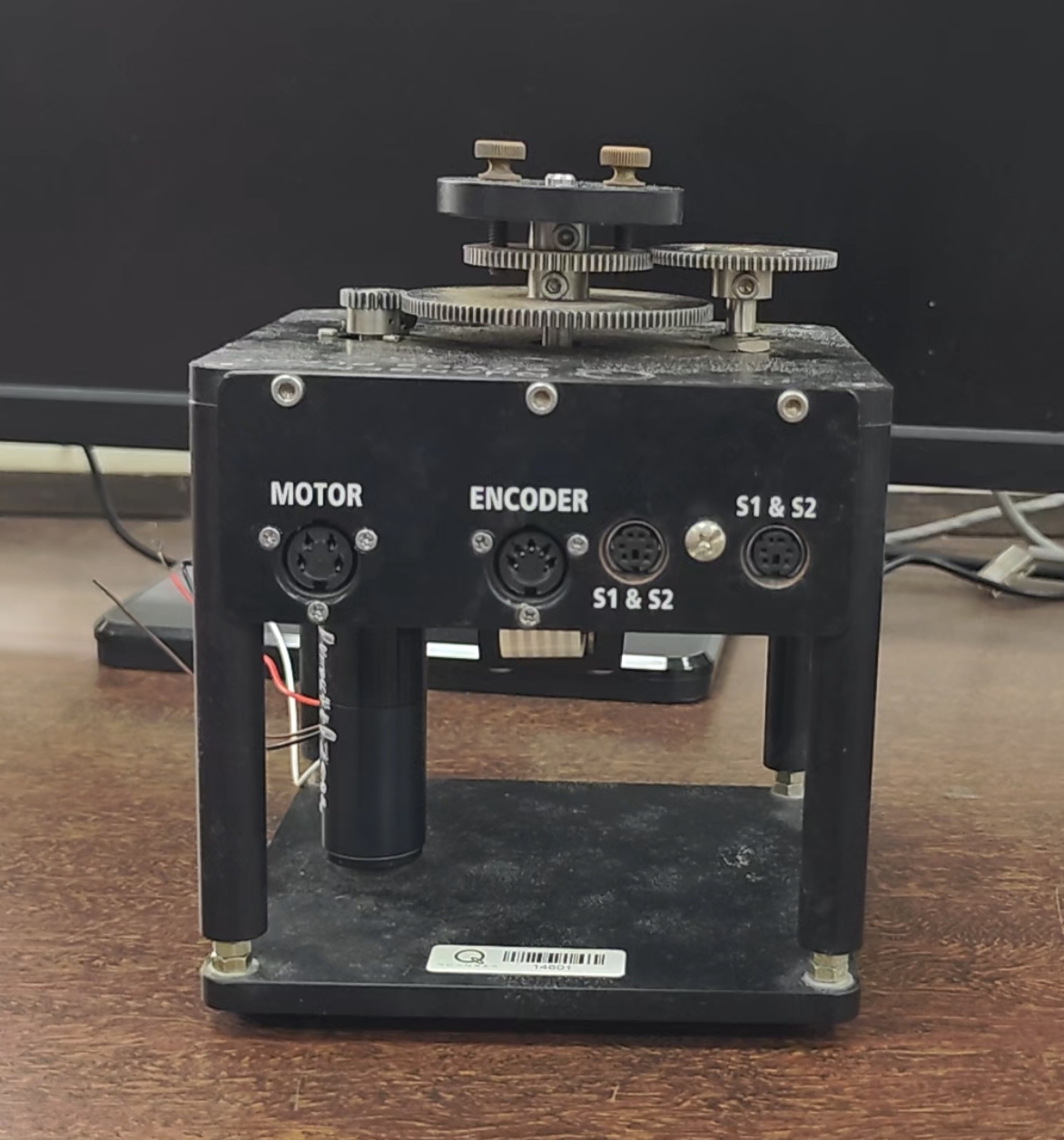
The Rotary Servo is a versatile platform used to learn and perform basic control system experiments. It is designed for position and speed control studies using a DC motor and geared servo mechanism. The system can be expanded with modules such as the Inverted Pendulum and Flexible Link for advanced experiments. A high-resolution optical encoder measures the load shaft position and estimates motor speed accurately. The Rotary Servo is widely used in control engineering education and research to understand real-time control concepts.

Watch More About Depatment and Labrotory

Department Contact

COEP TECHNOLOGICAL UNIVERSITY

Location icon

Instrumentation & Control Engineering Block, COEP Tech Campus, Pune 411005

Email & Phone numbers

+91 (020) 2550 7035
head.instrumentation@coeptech.ac.in